How to Clean Up Your Books Before Applying for a Business Loan

Before a bank or other lender decides whether to finance your business, it may want to understand how healthy and reliable your business finances are. That means looking at your revenue, expenses, cash flow, existing debt, profitability, and financial history.
And this is where your bookkeeping matters.
Imagine finding the right loan for your business, submitting your application, and then discovering that your financial records don’t tell a clear story. Your bank statements don’t match your books. Some expenses are sitting in the wrong categories. Outstanding invoices haven’t been properly tracked. Your profit and loss statement is outdated.
None of these issues necessarily mean your business is struggling. But messy books can make it harder for a lender to understand your actual financial position.
Before applying for financing, taking the time to clean up your books can help you present more accurate, organized, and up-to-date financial information.
Whether you’re applying for an SBA loan, business line of credit, equipment financing, or another type of small business loan, good bookkeeping can make the financial side of the application much easier to navigate.
In this guide, we’ll explain how to clean up your business books before applying for a loan, which financial records to review, common bookkeeping mistakes to fix, and how bookkeeping software like KeoBooks can help you keep your records organized.
Why Clean Books Matter When Applying for a Business Loan
Lenders want to understand your ability to manage debt and repay a loan.
To do that, they may review financial information such as your:
- Profit and loss statement
- Balance sheet
- Cash flow information
- Business bank statements
- Tax returns
- Accounts receivable
- Accounts payable
- Existing debts and liabilities
The exact documentation varies depending on the lender, loan type, and your business circumstances.
However, one thing remains consistent: your financial records need to accurately represent your business.
If your bookkeeping is outdated or contains unexplained discrepancies, you may have to spend additional time correcting your records and explaining them during the application process.
Clean bookkeeping also gives you a better understanding of your own financial position.
Before borrowing money, you should know how much revenue you’re generating, how much you’re spending, what you owe, and how much cash your business actually has available.
1. Bring Your Bookkeeping Up to Date
The first step is simple: make sure your books are current.
If you haven’t reconciled your books for several months, don’t wait until the lender asks for financial statements to start updating them.
Bring your records up to date by entering outstanding transactions and ensuring your bookkeeping software reflects your latest financial activity.
Look for:
- Missing income
- Unrecorded expenses
- Outstanding invoices
- Unrecorded payments
- Bank transactions that haven’t been categorized
- Duplicate transactions
- Old transactions that need clarification
The goal is to make sure your books reflect what is actually happening in your business.
If you’re using bookkeeping software such as KeoBooks, maintaining up-to-date records throughout the year can make this process much easier than trying to reconstruct months of financial activity at the last minute.
2. Reconcile Your Business Bank Accounts
One of the most important bookkeeping cleanup tasks is bank reconciliation.
Bank reconciliation involves comparing the transactions recorded in your accounting records with the transactions that actually occurred in your bank account.
Your goal is to make sure the two records agree.
Review each business bank account and look for discrepancies such as:
- Missing transactions
- Duplicate entries
- Incorrect transaction amounts
- Unrecorded bank fees
- Deposits that haven’t been recorded
- Payments that haven’t been entered
- Transactions assigned to the wrong account
Don’t forget about credit cards and other financial accounts used by the business.
A clean bank reconciliation can give you greater confidence that your financial statements are based on accurate information.
It can also help identify bookkeeping errors before they become a problem during the loan application process.
3. Review Your Income and Revenue Records
Your lender will likely want to understand how your business generates money.
That’s why your revenue records need to be accurate.
Review your sales and income records to make sure you’ve properly recorded the money your business has earned.
Check for:
- Missing sales
- Duplicate invoices
- Unpaid invoices
- Incorrect payment amounts
- Customer payments recorded against the wrong invoice
- Revenue recorded in the wrong period
If your business has multiple revenue streams, make sure each one is being tracked correctly.
For example, you might generate revenue from product sales, consulting services, subscriptions, and other sources.
Organizing these records can give you and your lender a clearer picture of your business’s financial performance.
4. Clean Up Your Accounts Receivable
If customers owe your business money, review your accounts receivable before applying for financing.
Create an accurate list of outstanding invoices and determine which ones are:
- Current
- Past due
- Seriously overdue
- Unlikely to be collected
Don’t assume that every outstanding invoice represents cash you’ll receive immediately.
An invoice that’s 90 days overdue isn’t the same as cash sitting in your bank account.
Cleaning up your accounts receivable can help you understand your actual expected cash inflows and identify customers who may require follow-up.
It can also help you avoid overstating your financial position.
With organized invoicing and payment tracking in KeoBooks, you can keep better visibility into outstanding customer balances and follow up on unpaid invoices before they become a larger cash-flow issue.
5. Review Your Accounts Payable
Next, take a close look at the money your business owes.
Accounts payable can include unpaid bills from:
- Suppliers
- Contractors
- Service providers
- Vendors
- Utilities
- Other business expenses
Make sure your records accurately reflect outstanding bills.
You should know:
Who do you owe? How much do you owe? And when is each payment due?
This information matters because lenders may want to understand your existing financial obligations.
It also helps you calculate your true liabilities and avoid making borrowing decisions based on incomplete information.
6. Correct Expense Categorization
Messy expense categories can make financial statements difficult to interpret.
For example, a business might accidentally record equipment purchases as ordinary office expenses or categorize personal purchases as business expenses.
Go through your expenses and look for transactions that appear to be incorrectly categorized.
Pay particular attention to:
- Large purchases
- Equipment
- Vehicle expenses
- Travel
- Payroll
- Contractor payments
- Rent
- Software subscriptions
- Insurance
- Professional services
- Owner-related transactions
If you’re unsure how a particular transaction should be treated for accounting or tax purposes, consider consulting your accountant or bookkeeper rather than guessing.
Accurate expense categorization helps ensure that your profit and loss statement provides a more reliable picture of business performance.
7. Separate Personal and Business Expenses
Mixing personal and business finances can create significant bookkeeping headaches.
If you’ve been using a business bank account or credit card for personal purchases—or vice versa—review those transactions carefully.
Personal expenses should generally not be treated as ordinary business expenses simply because they passed through a business account.
Work with your accountant or bookkeeper to correctly identify and record these transactions.
Going forward, maintain clear separation between your personal and business finances.
This doesn’t just make bookkeeping easier. It can also make your financial records much easier to understand when you’re preparing financial information for a lender.
8. Review Your Debt and Liabilities
Before applying for a new loan, make sure you know exactly what your business already owes.
Review:
- Existing business loans
- Lines of credit
- Credit cards
- Equipment financing
- Outstanding vendor balances
- Other liabilities
Check that the balances recorded in your books are consistent with your current statements.
You should also understand the payment terms and interest associated with your existing debt.
This information can help you and your lender evaluate your current debt obligations and determine whether additional financing makes sense for the business.
9. Make Sure Your Financial Statements Are Current
Once you’ve cleaned up your underlying bookkeeping records, generate updated financial statements.
Common financial statements include:
a. Profit and Loss Statement
Shows your revenue, expenses, and profit or loss over a specific period.
b. Balance Sheet
Provides a snapshot of your assets, liabilities, and owner’s equity.
c. Cash Flow Statement
Shows how cash moves into and out of your business.
Depending on the lender and loan application, you may be asked for specific statements covering specific periods.
Don’t simply download an old report from your accounting software.
Make sure the reports reflect your most recent and reconciled financial data.
With bookkeeping software like KeoBooks, keeping financial information organized can make it easier to access the reports you need when preparing for financing.
10. Compare Your Books With Your Tax Returns
Another useful cleanup step is comparing your bookkeeping records with previously filed business tax returns.
You don’t necessarily need every number to look identical because accounting and tax reporting can involve different treatments and adjustments.
However, significant unexplained differences should be investigated.
If you find discrepancies between your bookkeeping records and tax filings, talk to your accountant or tax professional before submitting financial information to a lender.
The objective isn’t to make your books “look better.”
It’s to make sure they accurately reflect your business and that you understand why the numbers are what they are.
11. Check Your Cash Flow
A business can be profitable and still have cash-flow problems.
That’s why you shouldn’t focus only on your bottom-line profit.
Review your cash position and ask:
- How much cash is currently available?
- How much money is expected to come in?
- What bills are coming due?
- What debt payments do you have?
- Are customers paying on time?
- How much cash does the business typically need to operate each month?
Understanding your small business cash flow is particularly important when considering additional debt.
A loan payment becomes another recurring financial obligation, so you should understand how comfortably your current cash flow can support it.
12. Look for Unusual or Unexplained Transactions
Before finalizing your books, review transactions for anything that doesn’t make sense.
Look for:
- Large unexplained deposits
- Unusual withdrawals
- Duplicate transactions
- Negative balances
- Uncategorized transactions
- Old outstanding checks
- Unexpected expenses
- Transactions recorded in the wrong accounting period
Don’t ignore something simply because it’s inconvenient to investigate.
An unexplained transaction today can become a much bigger headache when you’re trying to explain your financial statements later.
13. Don’t Try to Make Your Numbers Look Better
This is one of the most important rules when preparing your books for a business loan.
Cleaning up your books does not mean manipulating your numbers.
Don’t:
- Hide legitimate expenses
- Invent revenue
- Remove legitimate liabilities
- Delay recording expenses
- Record fake sales
- Move transactions simply to increase reported profit
Your goal should be accuracy, not appearance.
A lender needs an honest representation of your financial position, and you need accurate information to decide whether taking on additional debt is financially responsible.
If your numbers reveal weaknesses, that’s valuable information too. It gives you an opportunity to address those issues before taking on a new financial obligation.
How KeoBooks Can Help You Keep Your Books Loan-Ready
Cleaning up your books before applying for a loan is much easier when you don’t have to start from scratch every time.
This is where bookkeeping software can become part of your regular financial workflow.
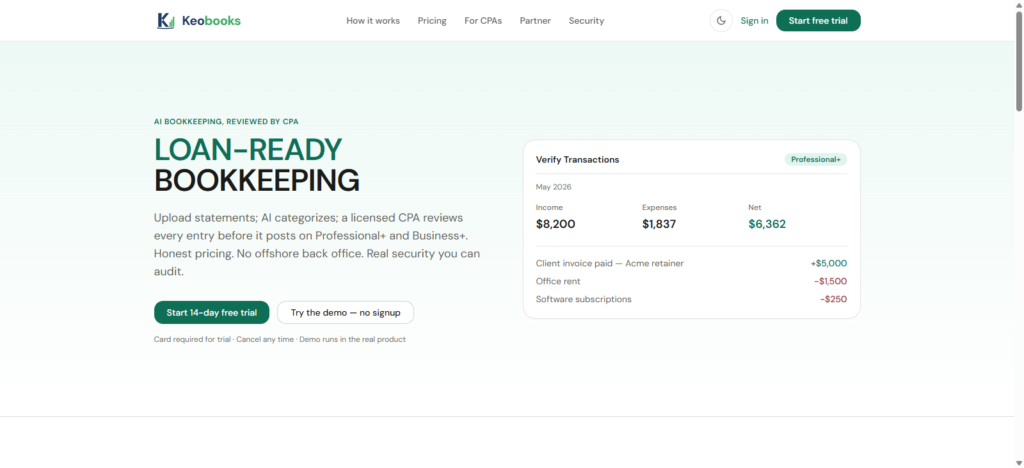
KeoBooks helps small businesses organize their bookkeeping and maintain better visibility into their financial information throughout the year.
Instead of waiting until you’re applying for financing to discover that your records are incomplete, you can make accurate bookkeeping part of your normal business routine.
With an organized bookkeeping system, you can spend less time searching through spreadsheets and scattered records and more time reviewing the financial information that matters.
KeoBooks can help you stay on top of essential bookkeeping activities such as tracking income and expenses, organizing transactions, managing invoices, and accessing financial information.
And when you’re ready to apply for financing, having your books already organized can make the preparation process considerably less stressful.
Don’t Wait Until the Loan Application
One of the biggest mistakes a business owner can make is treating bookkeeping cleanup as something that only happens before tax season or a loan application.
Your financial records should be maintained continuously.
When your books are consistently updated and reconciled, preparing financial statements or gathering information for a lender becomes a much more straightforward process.